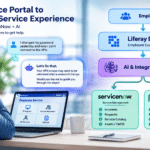

In today’s fast-moving digital landscape, DevOps is often reduced to a set of tools—primarily CI/CD pipelines that automate build, test, and deployment processes. While these pipelines are essential, they represent only a fraction of what DevOps truly enables.
Organizations that equate DevOps with tooling alone often miss the larger opportunity. DevOps, when done right, is not just about automation—it is about creating a unified operating model that aligns people, processes, and platforms to accelerate high-quality software delivery at scale.
The real shift happens when DevOps evolves from a pipeline-centric mindset into a strategic capability embedded across the organization.
Moving Beyond the Maintenance Trap
A common challenge in enterprise DevOps journeys is not the lack of tools, but the persistence of underlying complexity. Many organizations invest in pipelines and automation, yet continue to struggle with fragile systems and operational overhead.
This leads to what can be described as a maintenance trap, where engineering teams spend the majority of their time sustaining systems rather than building new capabilities. When 60–80% of effort is consumed by patching, troubleshooting, and operational firefighting, even the most advanced CI/CD setup fails to deliver meaningful acceleration.
Breaking out of this cycle requires more than better pipelines. It demands a deliberate platform strategy that simplifies infrastructure, reduces operational burden, and allows teams to focus on delivering business value rather than managing complexity.
Platform Engineering: Making the Right Path the Easy Path
As systems grow more distributed and complex, organizations are increasingly adopting platform engineering to bring structure and consistency to DevOps practices.
Instead of expecting every development team to navigate infrastructure, security, and deployment intricacies independently, internal developer platforms provide a curated, self-service experience. These platforms standardize workflows and embed best practices into reusable templates.
A key concept here is the idea of “golden paths”—predefined, opinionated ways of building and deploying applications that include everything from CI/CD configurations to security controls and infrastructure provisioning.
By making the preferred approach the easiest one to follow, organizations reduce cognitive load on developers and create a consistent, scalable delivery model. This shift transforms DevOps from a fragmented toolchain into a cohesive, product-like platform that empowers teams to move faster with confidence.
Intelligent Operations and Built-In Security
Modern DevOps must also evolve to handle the scale and complexity of cloud-native systems. This is where intelligence and security become integral—not optional—components of the delivery lifecycle.
With the rise of distributed architectures, traditional monitoring approaches are no longer sufficient. AIOps introduces real-time intelligence into operations, enabling systems to detect anomalies, predict issues, and in some cases, resolve them automatically before they impact users. This reduces downtime and enhances system resilience without increasing manual effort.
At the same time, security must shift from being a late-stage checkpoint to a continuous, embedded practice. DevSecOpsintegrates security directly into development workflows, ensuring vulnerabilities are identified and addressed early. This not only improves compliance but also accelerates delivery by eliminating last-minute security bottlenecks.
Together, these approaches create a more proactive, resilient, and secure DevOps ecosystem.
Culture as the Foundation of DevOps
While platforms and automation are critical, they are only effective when supported by the right culture. DevOps is fundamentally a cultural transformation that redefines how teams collaborate, take ownership, and respond to change.
High-performing organizations move away from siloed structures and embrace cross-functional teams that share responsibility across the entire lifecycle—from development to operations and beyond. This alignment fosters faster feedback loops and better decision-making.
Equally important is the concept of psychological safety. Teams that treat failures as learning opportunities rather than assigning blame are better positioned to innovate and improve continuously.
Measurement also plays a crucial role. While metrics such as deployment frequency and lead time provide valuable insights into delivery performance, they must ultimately connect to business outcomes like customer satisfaction, revenue growth, and operational efficiency.
The DevOps Flywheel: From Efficiency to Innovation
When DevOps is approached holistically, it becomes a powerful engine for continuous improvement. Automation reduces delivery friction, platform engineering minimizes operational overhead, and intelligent systems enhance reliability and performance.
The result is a compounding effect—a DevOps flywheel—where efficiency gains free up capacity, and that capacity fuels further innovation. Organizations are no longer constrained by their systems; instead, they are empowered to evolve continuously.
Rethinking DevOps as a Strategic Capability
DevOps is not just about faster deployments or better pipelines. It is about building an ecosystem where technology, teams, and processes work in harmony to deliver sustained business value.
Organizations that succeed with DevOps look beyond tools. They invest in platforms that simplify complexity, embed security and intelligence into workflows, and cultivate a culture of collaboration and ownership.
In doing so, they transform DevOps from an operational practice into a strategic advantage—one that enables speed, resilience, and long-term growth.