
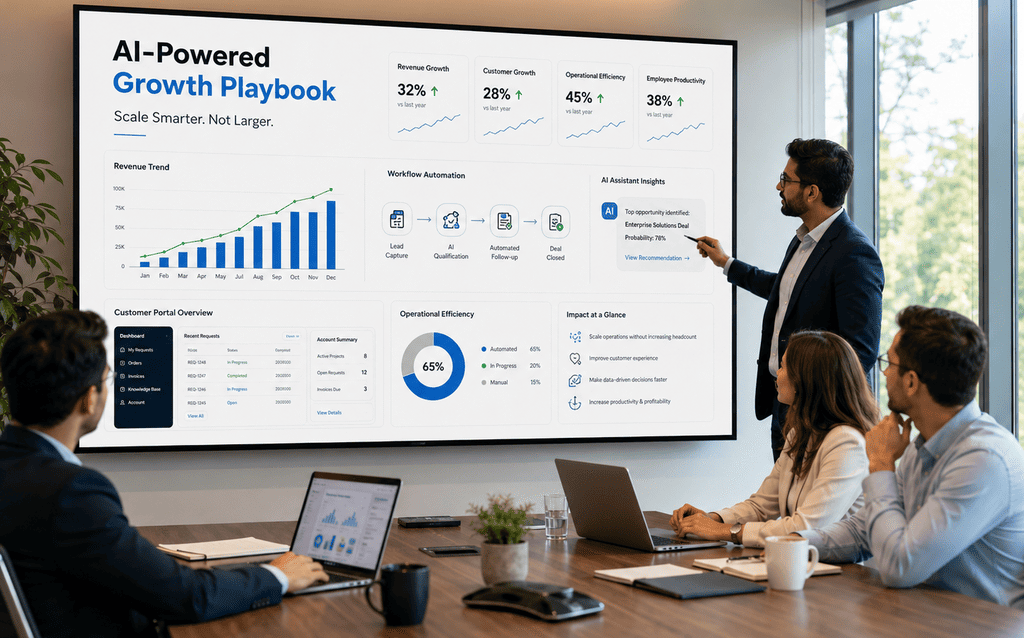
The SMB Growth Dilemma For many small and medium-sized businesses, growth brings a familiar challenge. More customers often mean more emails to respond to, more service requests to manage, more reports to generate, and more operational complexity to handle. The traditional…
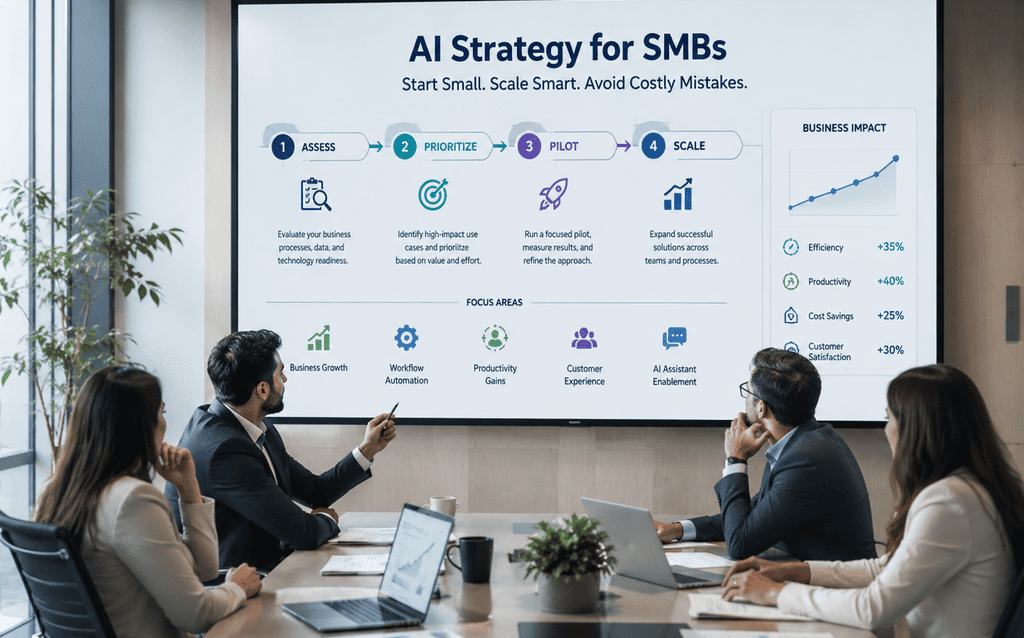
AI Strategy for SMBs: Where to Start and How to Avoid Costly Mistakes
Artificial Intelligence has quickly moved from a future technology to a business necessity. From customer service automation and content generation to operational efficiency and predictive insights, AI is creating opportunities for organizations of every size, but success requires a clear AI Strategy…
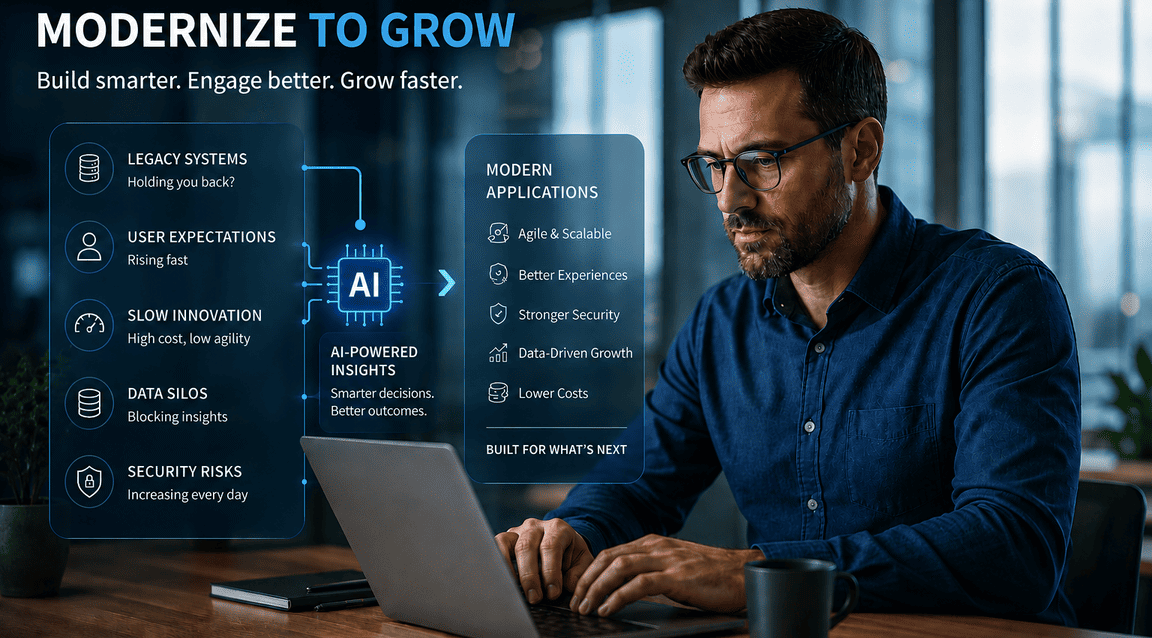
10 Signs Your Organization Needs Application Modernization in 2026
Technology is evolving faster than ever, yet many organizations continue to rely on applications built years—or even decades—ago. While these systems may still function, they often create barriers to innovation, limit business agility, and increase operational risk. Application modernization is no…
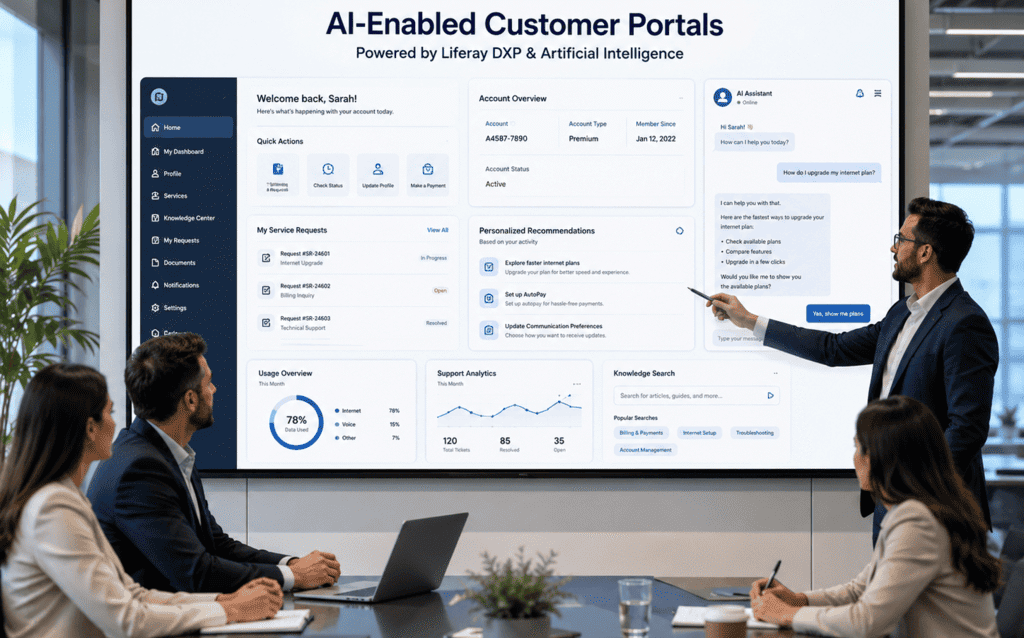
Building AI-Enabled Customer Portals with Liferay DXP
The Future of Customer Experience Is Intelligent For years, customer portals have served as digital gateways for organizations to provide information, support self-service transactions, and streamline customer interactions. While these portals have helped businesses improve accessibility and reduce operational costs, customer…
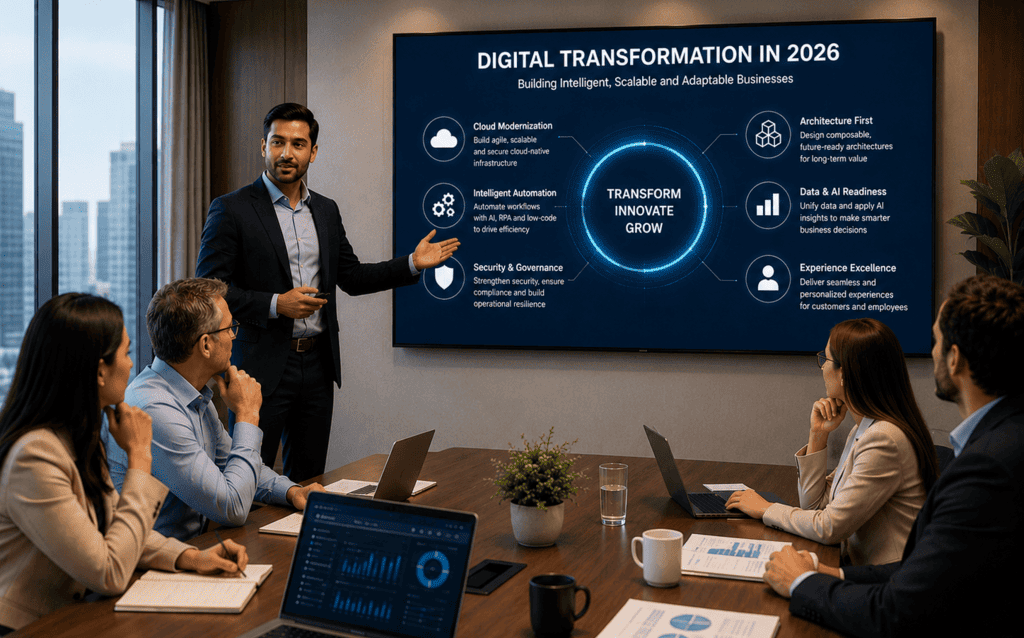
What Digital Transformation Actually Means in 2026
For years, digital transformation was treated as a technology modernization exercise. Organizations upgraded websites, migrated applications to the cloud, and automated selected workflows, yet many businesses continued operating with the same fragmented processes, disconnected systems, and legacy decision-making models. In 2026,…

Why Liferay DXP and Client Extensions Are the Future of Enterprise Applications
Enterprise digital platforms are evolving rapidly, and organizations are increasingly moving away from tightly coupled systems that demand long release cycles, complex deployments, and highly specialized platform expertise. Modern businesses now require agility, faster innovation, and the ability to build scalable…
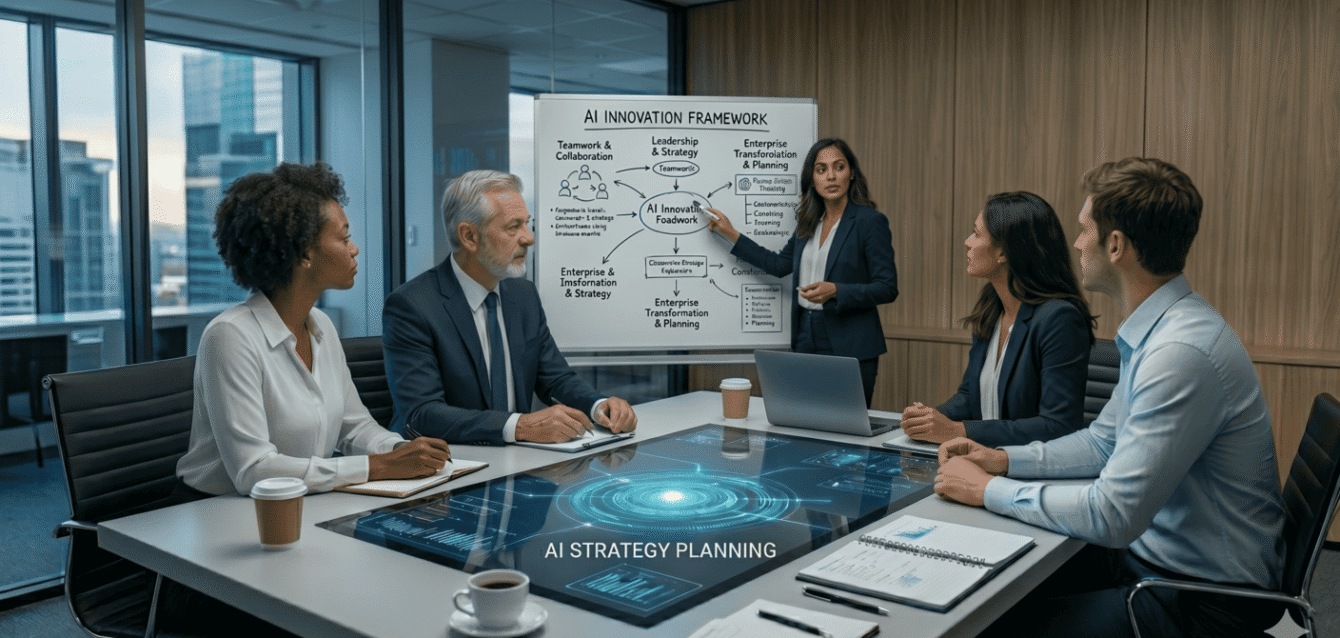
The AI Shift: Accelerating Business Transformation and Enterprise Innovation
For years, digital transformation initiatives focused on modernizing existing systems, streamlining operations, and improving customer experiences incrementally. Organizations invested heavily in cloud adoption, platform modernization, automation, and process optimization to remain competitive in rapidly evolving markets. Today, however, the conversation has…
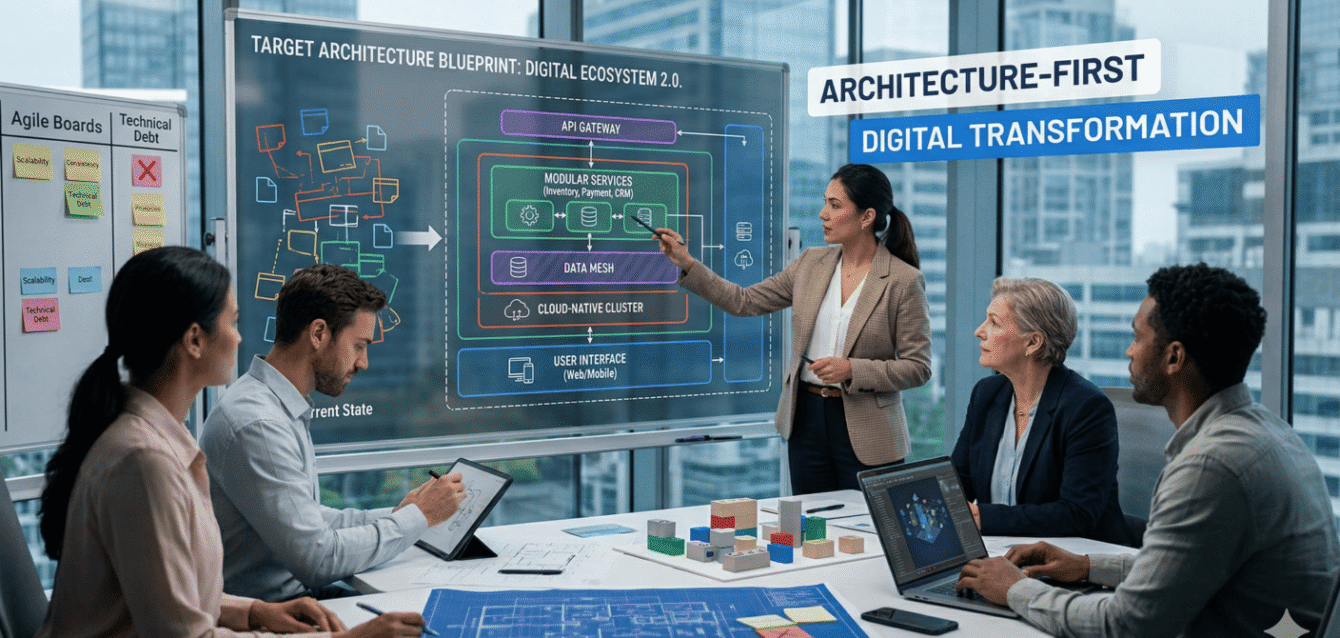
Architecture-First Digital Transformation: Why It Matters
Introduction Digital transformation has become a strategic priority for organizations looking to stay competitive in an increasingly digital world. Yet, despite significant investments in new platforms, cloud adoption, and modern engineering practices, many initiatives fail to deliver lasting value. Systems become…

Why Digital Transformation Fails — And How Architecture-First Strategy Fixes It
Many digital transformation initiatives fail because organizations focus on tools instead of strategy. An architecture-first approach provides the foundation needed to align technology, systems, and business goals for long-term success.